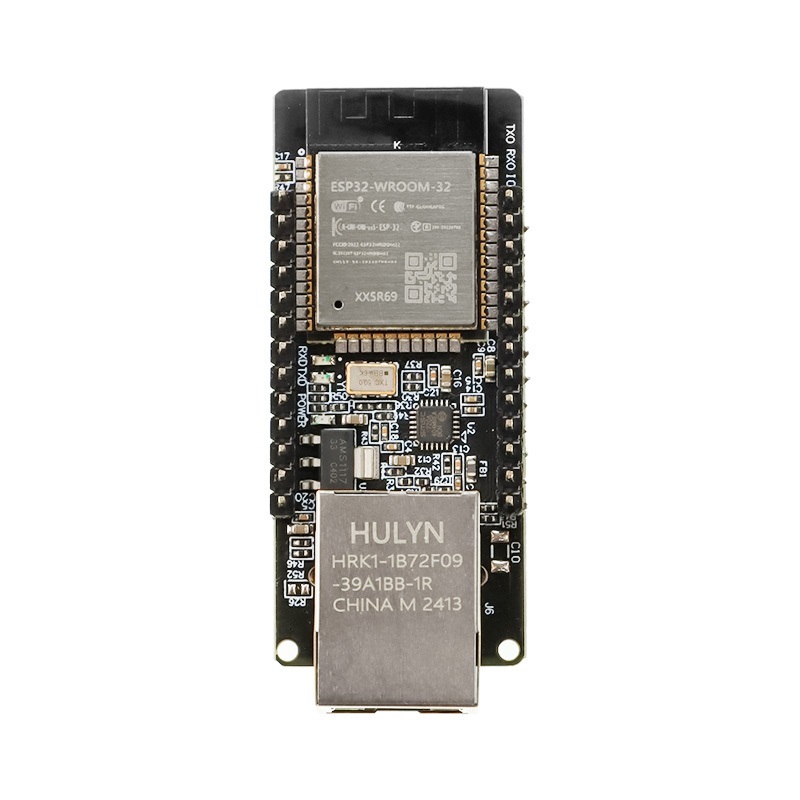
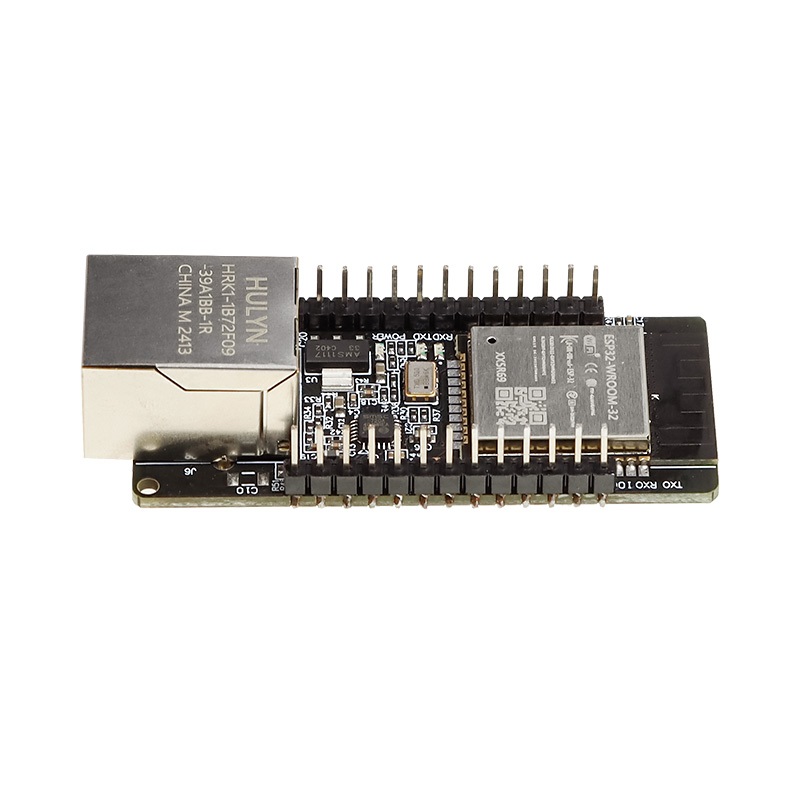
The ELECROW ESP32 WT32-ETH01 Module is a versatile development board that enables seamless Ethernet and WiFi connectivity for embedded systems through a serial interface. Built around the ESP32 microcontroller, this module supports both WiFi 802.11 b/g/n and Ethernet connections, making it an ideal choice for IoT, industrial, and networking applications. With the capability to act as a serial-to-Ethernet/WiFi gateway, the WT32-ETH01 offloads networking complexity from the host system, simplifying communication and integration for various projects and applications.
✨ Key Features and Benefits
- ESP32 Microcontroller: Powerful dual-core MCU with integrated WiFi and Bluetooth
- Ethernet Connectivity: Built-in RJ45 port with PHY support for reliable LAN communication
- Serial Interface: UART interface for easy connection to host devices
- Flexible Communication: Supports TCP/IP, UDP, and MQTT protocols
- Dual Network Support: Simultaneous WiFi and Ethernet operation for gateway applications
🔧 Material and Construction Details
| Component | Material | Description |
|---|---|---|
| Microcontroller | ESP32-WROOM | Dual-core MCU with WiFi and Bluetooth |
| Ethernet PHY | RJ45 Connector | Integrated LAN interface with magnetics |
| PCB | FR-4 | 2-layer board with solder mask protection |
| Connectors | Gold-Plated Pins | UART interface, power, and GPIO pins |
| LED Indicators | High-Brightness LEDs | Network, WiFi, and power status indicators |
📚 Use Cases and Applications
- IoT gateways and sensor nodes
- Home automation and smart devices
- Industrial monitoring and control systems
- Serial-to-Ethernet/WiFi communication bridges
- Embedded networking projects and prototypes
- Remote data logging and telemetry
🔍 Technical Specifications
| Specification | Details |
|---|---|
| Microcontroller | ESP32-WROOM |
| WiFi | 802.11 b/g/n |
| Ethernet | 10/100 Mbps with RJ45 PHY |
| Interface | UART Serial |
| Supported Protocols | TCP, UDP, HTTP, MQTT |
| Operating Voltage | 3.3V DC |
| GPIO | Multiple configurable pins |
| Operating Temperature | -40°C to 85°C |
| Dimensions | Approx. 50mm × 25mm |
🔌 Connection Diagram
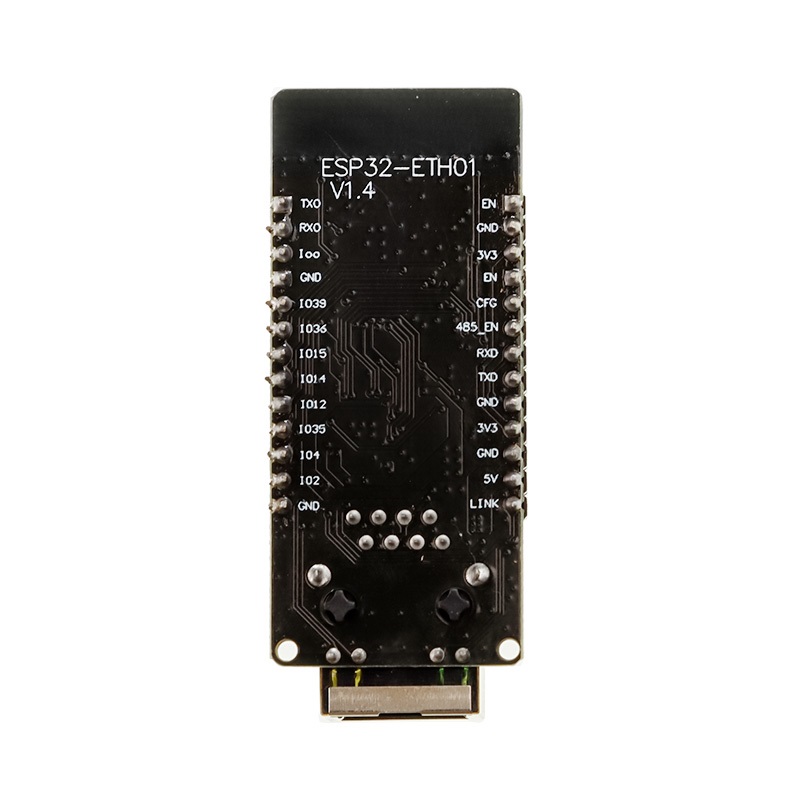
The WT32-ETH01 provides a UART interface for host communication, along with Ethernet and WiFi connectivity. LEDs indicate power, network, and WiFi status.
| Connection Type | Description |
|---|---|
| Ethernet Port | RJ45 for LAN connection |
| UART Interface | TX, RX, GND, VCC pins |
| Power Supply | 3.3V DC input |
| Reset Pin | External reset control |
| Status Indicators | LEDs for power, network link, and WiFi |
⚙️ Setup and Configuration
Integrating the WT32-ETH01 into your system is straightforward. Connect the UART pins to your host MCU, power the module with 3.3V, and use AT commands or firmware libraries to configure network settings. The module can act as a TCP/UDP gateway, enabling seamless communication between serial devices and Ethernet or WiFi networks. Extensive documentation and example code are available for Arduino, ESP-IDF, and other platforms.
⚠ Important Notes
Ensure the module is powered with 3.3V and do not exceed voltage limits. Ethernet communication requires proper cabling and shielding in industrial environments. For high-speed serial communication, keep wiring short and avoid long jumper cables. Always follow ESP32 guidelines for GPIO usage and power supply decoupling.
👍👎 Pros & Cons
| Pros | Cons |
|---|---|
| Dual WiFi and Ethernet support | Requires 3.3V power supply |
| ESP32 with strong processing power | Limited Ethernet speed (10/100 Mbps) |
| Serial-to-network gateway functionality | Additional configuration needed for complex networks |
| Multiple communication protocols supported | UART interface only (no SPI) |
| Compact and versatile development board | Requires host MCU or microcontroller |
🅿 Product Images: